Loading...
Serving Yucca Valley, CA and surrounding areas. (442) 205-1935
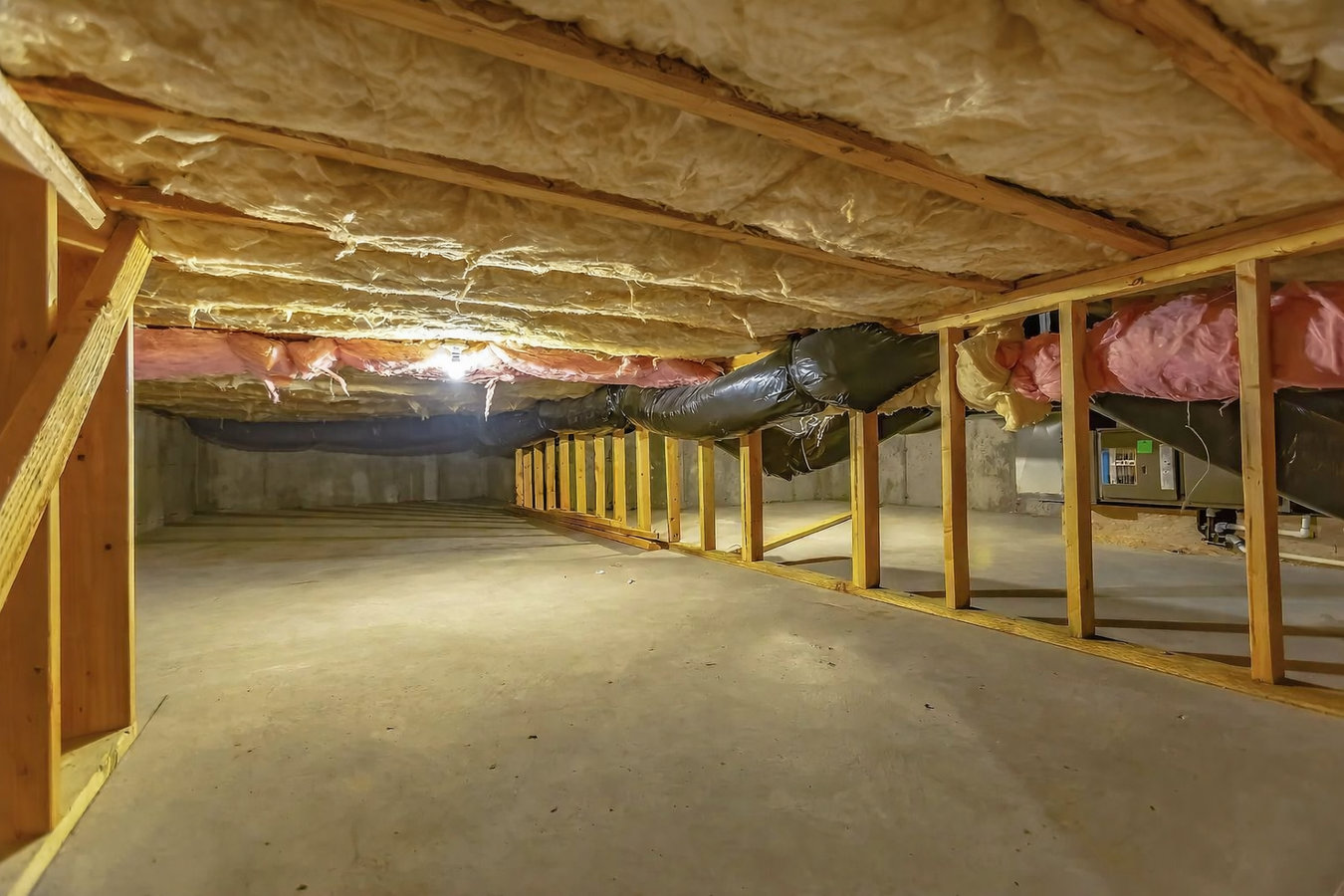
Heat rising through uninsulated floors drives up cooling costs all summer. We insulate basements and below-grade spaces so your home holds temperature without your AC running nonstop.
Basement insulation in Yucca Valley slows heat transfer through your floors and below-grade walls, keeping conditioned air inside and reducing the load on your cooling system - most residential jobs are completed in one to two days with results you notice on the next hot afternoon.
In the High Desert, where summer highs push past 100 degrees and winter nights can drop below freezing, the space between your living area and the ground is one of the most overlooked sources of heat gain. An uninsulated basement or crawl space lets outside temperatures work directly against your comfort and your utility bill. Basement insulation in Yucca Valley creates a true barrier in that zone. If you are also dealing with moisture or pest issues in your crawl space, pairing this work with our crawl space insulation service addresses both problems at once.
Most Yucca Valley homes were built between the 1950s and 1990s, well before California's current energy standards took effect. If your home dates from that era and has never had below-grade insulation work done, there is a strong chance it is losing conditioned air through the floor every day.
In Yucca Valley's desert heat, air conditioners work hard from May through September. If your electricity bill climbs sharply each summer and your home never quite feels cool - even with the AC running constantly - heat is likely entering through an under-insulated floor or basement ceiling. This is one of the clearest signs that your insulation is not doing its job.
Walk barefoot across the floor directly above your basement or crawl space on a hot afternoon. If it feels noticeably warmer than other floors in the house, heat is transferring upward from the uninsulated space below. In Yucca Valley's climate, where ground-level temperatures stay high well into the evening, this is a common and fixable problem.
If one part of your home is always cooler or warmer than another, or if you feel a draft near the floor on a windy day, air is moving through gaps in your home's envelope. Basements and crawl spaces are common entry points. This is especially noticeable in older Yucca Valley homes built before modern air-sealing practices became standard.
If you can see into your basement or crawl space and the insulation looks compressed, torn, or patchy - or there are areas with no insulation at all - it is not doing its job. Insulation disturbed by pest activity, which is common in the High Desert, is especially likely to have gaps that let heat and air move freely through the floor.
We insulate basement walls, basement ceilings, crawl space floors, and the rim joist - the framing that sits on top of your foundation wall and is one of the biggest air leak points in older homes. Depending on your space and budget, we install spray foam, rigid foam boards, or fiberglass batts, and we recommend the right material after seeing your home in person. For basements and below-grade spaces where maximum performance per inch matters, our closed-cell foam insulation option delivers the highest insulating value and resists moisture at the same time.
Every job starts with an air-sealing pass before insulation goes in. Insulation slows heat, but air sealing closes the actual gaps where outside air enters. Doing one without the other is like wearing a thick jacket with the zipper open. We seal gaps around pipes, wires, and the rim joist before installing any insulation material - this combination delivers the biggest improvement in comfort and energy savings.
Best for homes with a conditioned basement - insulates the concrete or block walls that touch the soil outside.
Ideal for unconditioned basements - separates the below-grade space from your living area with a continuous thermal layer.
Targets one of the most common air leak points in older homes, where the floor framing meets the foundation wall.
For homes without a full basement - insulates the underfloor envelope to stop heat from rising into living spaces.
Yucca Valley sits at roughly 3,300 feet in the Mojave Desert, where day-to-night temperature swings can reach 40 degrees or more in a single summer day. That constant thermal cycling puts stress on your home's envelope in both directions. Most homes in this area were built in the 1950s through 1980s, long before California adopted the energy standards that now apply to permitted insulation work. If your home was built in that era and has never had below-grade insulation upgraded, you are almost certainly paying for that gap every month. The dry desert air is actually an advantage here - moisture damage and mold that destroy insulation in wetter climates are far less common in Yucca Valley, so properly installed insulation tends to last for decades.
California's energy code requires that permitted insulation work meet minimum performance standards for Yucca Valley's climate zone - one of the hottest and driest in the state. Homeowners in Joshua Tree and Twentynine Palms face the same climate conditions and the same older housing stock. We work throughout this part of the High Desert and know what to expect in homes from every era of local construction. The California Energy Commission publishes the current standards if you want to understand what your climate zone requires.
We respond within 1 business day. You will answer a few basic questions about your home and what you have noticed - high bills, warm floors, or specific areas of concern. No pressure, no commitment required to get on our schedule.
We visit your home and look at the space in person - checking what is already there, identifying gaps or damage, and assessing whether air sealing is needed before new insulation goes in. This visit typically takes 30 to 60 minutes.
You receive a written quote that breaks down cost by material and labor, and specifies the performance level of the insulation being installed. Review it carefully and ask about anything that is not clear before you sign - no surprise charges after the fact.
The crew seals gaps first, then installs insulation. Most jobs finish in one to two days. When the work is done, we walk you through what was completed so you can see it yourself. If a permit was pulled, we coordinate the county inspection.
Free in-home estimate. Written quote before we start. No pressure, no obligation.
When permits are required, we pull them and coordinate the San Bernardino County inspection. That means a county inspector - not just our crew - confirms the work meets California's standards. You get documentation you can point to at resale.
Yucca Valley falls in one of the state's most demanding climate zones. We install insulation that meets the current California energy code requirements for your zone - so the work is not just done, it is done to a standard that holds up. You get written documentation of the finished work so you can confirm it meets the standard for your zone.
Most homes in Yucca Valley were built between the 1950s and 1980s. We know what to expect inside those walls - compressed original batts, pest disturbance, rim joist gaps, and non-standard framing. We come prepared for the conditions these homes actually have, not just what a blueprint might show.
You receive a written estimate that spells out exactly what is being done, what materials are being used, and the total cost - before anyone touches your home. No surprises on the final invoice. If the scope changes during the job, we tell you before we proceed.
These are not just policies - they are what separates a contractor worth hiring from one worth avoiding. We work throughout Yucca Valley and the surrounding High Desert because we have built a reputation for straightforward work and honest communication, and we intend to keep it that way.
The highest-performing insulation per inch - ideal for basement walls and rim joists where space is limited and moisture resistance matters.
Learn MoreFor homes without a full basement, crawl space insulation closes the underfloor envelope and stops heat from rising into living spaces.
Learn MoreSummer heat in the High Desert waits for no one - call now to lock in your installation date before the busy season fills up.