Loading...
Serving Yucca Valley, CA and surrounding areas. (442) 205-1935
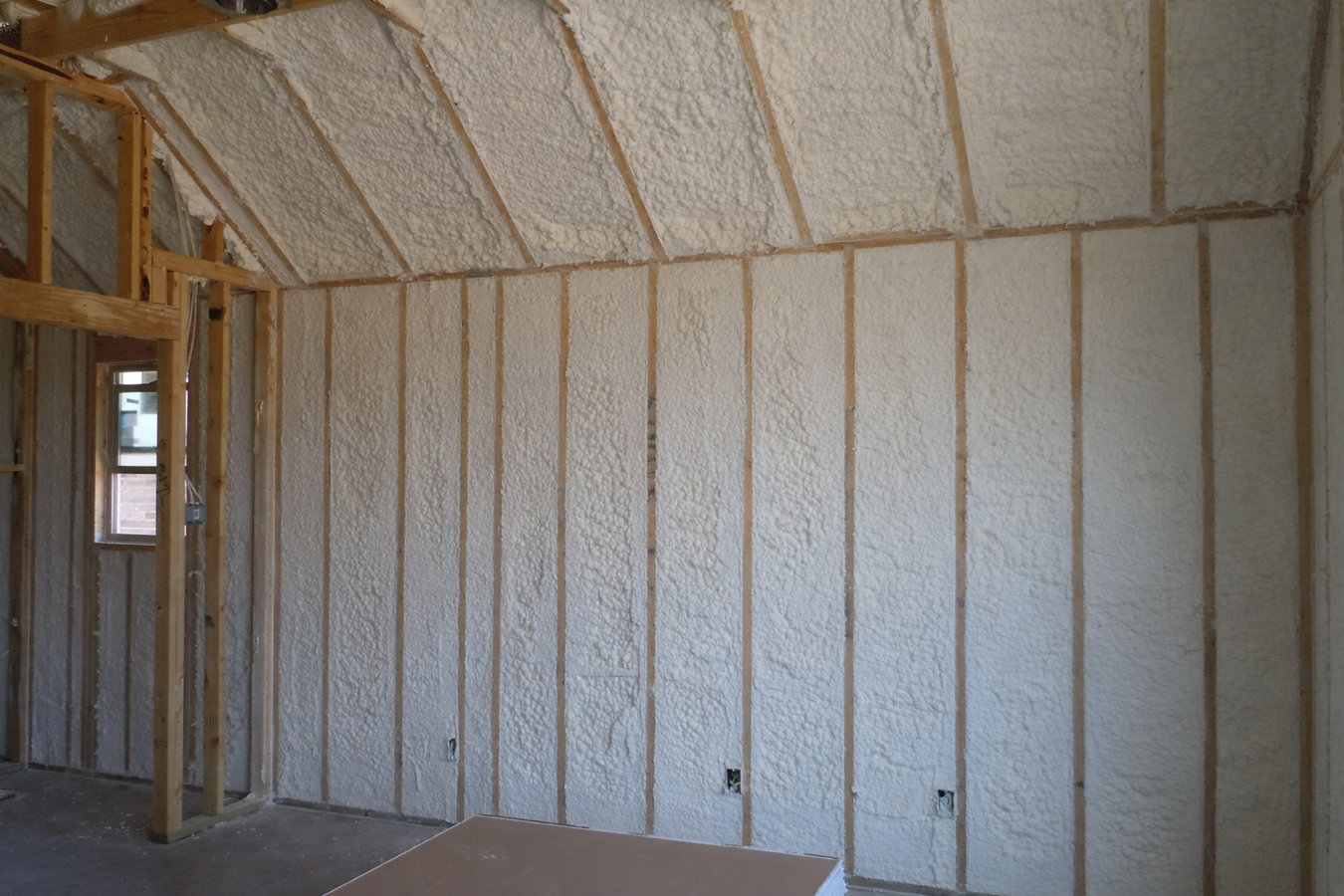
The High Desert demands the best insulation available. Closed-cell foam delivers the highest value per inch, seals air leaks on contact, and reduces the dust that infiltrates older desert homes.
Closed-cell foam insulation in Yucca Valley is sprayed as a liquid, expands into a dense rigid layer, and seals air gaps while insulating at the same time - most residential projects covering an attic or crawl space are completed in a single day, with results you feel on the next hot afternoon.
Unlike fiberglass batts or loose-fill insulation, closed-cell foam does two jobs at once: it slows heat transfer and physically blocks air from moving through cracks, gaps, and seams. Air leaks are one of the biggest reasons homes feel stuffy, dusty, or hard to cool even when the AC runs constantly - and closing those leaks is often the single most effective improvement you can make to a desert home. If you are comparing foam options, our spray foam insulation page covers both open-cell and closed-cell in detail so you can understand the tradeoffs before your estimate.
A large share of Yucca Valley homes were built in the 1950s through 1980s with very little wall insulation and minimal attic coverage. Closed-cell foam can be added to existing surfaces without opening up walls, which makes it a practical upgrade for older homes that were never properly insulated to begin with.
If your air conditioner runs for hours and the house still feels warm by mid-afternoon, heat is getting in faster than your system can remove it. In Yucca Valley, where summer temperatures regularly exceed 100 degrees, an under-insulated attic acts like a heat radiator pushing warmth directly into your living space. This is one of the clearest signs your insulation is not doing its job.
Yucca Valley's high desert environment means fine sand and dust are constantly in the air outside. If that dust shows up on furniture, countertops, and window sills faster than seems reasonable, it is likely getting in through gaps and cracks in your walls, attic, or around windows and doors. Closed-cell foam seals those entry points and can significantly reduce how fast surfaces get coated.
A sudden jump in your electricity bill during the hottest months - especially in an older home - often points to an insulation problem. When your home cannot hold a stable temperature, your heating and cooling system has to work much harder, and that shows up directly on your utility bill. Comparing bills month-to-month over a year can reveal a pattern worth investigating.
If one room is noticeably hotter or colder than another, heat and air are moving unevenly through your home's structure. Rooms directly under the roof or on the west-facing side of the house are especially prone to this in the high desert. Uneven temperatures are a reliable indicator that insulation is missing, thin, or damaged in specific areas.
We install closed-cell foam in attics, crawl spaces, basement walls, rim joists, and exterior wall cavities. The material is applied as a liquid that expands and hardens into a dense, rigid layer in seconds, sealing every gap it contacts. For spaces where insulating value per inch is the top priority - attics, roof decks, and below-grade walls - closed-cell foam is the strongest option available. If you are looking at your whole home and want to understand how closed-cell fits into a complete insulation plan, our open-cell foam insulation page explains where the more affordable alternative makes sense and where closed-cell is worth the higher cost.
Every job starts with a walkthrough of the areas you want insulated. We check accessibility, note what is already there, and identify whether any prep work is needed before foam can be applied. We do not quote over the phone for foam work - the specifics of your home's layout, age, and current insulation state all affect the recommendation we make and the price we quote.
Best for homes where maximum heat blocking in the attic is the priority - handles extreme desert temperatures without settling or shifting.
Seals the underfloor envelope and resists moisture in below-grade spaces where humidity and pests can damage softer materials.
Insulates and air-seals concrete or block walls in a single pass - ideal for conditioned below-grade spaces in older desert homes.
Targets the most common air leak points in older homes, where floor framing meets foundation walls and exterior wall cavities are under-filled.
Yucca Valley sits at roughly 3,300 feet in the Mojave Desert, where temperatures can swing 40 degrees or more between a summer afternoon and the same night. That daily thermal cycling means your home's insulation is working hard in both directions - keeping heat out during the day and holding warmth in after sunset. Closed-cell foam handles this cycling better than most materials because it does not compress, settle, or shift over time the way softer insulation can. The high desert also has fine sand and particulate blowing through constantly - and because closed-cell foam physically seals the surfaces it is sprayed onto, it dramatically reduces how much of that dust finds its way inside. Homeowners who have lived in older Yucca Valley homes for years often describe the dust reduction as one of the first things they notice after installation.
California's energy code requires that permitted insulation work meet minimum performance levels, and Yucca Valley falls in one of the state's most demanding climate zones. Closed-cell foam typically meets or exceeds those requirements, which is part of why it is a popular choice for serious upgrades. Homeowners in Palm Desert and Desert Hot Springs face similar climate conditions, and we bring the same approach across all of these high-heat communities. You can review the current state standards at the California Energy Commission.
We respond within 1 business day. You will answer a few basic questions about your home and which areas you want insulated. Because contractor availability in the high desert can be limited heading into summer, reaching out early gives you the best scheduling options.
We walk through the areas you want insulated - checking accessibility, what is already there, and whether any prep is needed before foam goes in. This visit typically takes 30 to 60 minutes and is the right time to ask questions. We explain what we see in plain language.
You receive a written quote with a clear scope and total cost. If a San Bernardino County permit is required, we handle pulling it before work begins. A permit adds a week or two to the timeline but means the work is inspected - that inspection is your assurance the job was done correctly.
The crew arrives, masks off surfaces, and applies the foam. Plan to be out of the home - with pets - for at least two to four hours after the work is done. We give you a specific re-entry time before the job starts. When the work is complete, we do a final walkthrough together before leaving.
Free in-home estimate. Written quote before we start. You need to be out during application - we tell you exactly when it is safe to return.
Closed-cell foam pricing varies significantly based on accessibility, surface condition, and how many passes are needed to hit the right depth. We do not give binding phone quotes for foam work. Every estimate comes from a contractor who has seen your home - which means the written price you receive reflects your actual job, not a guess.
When your project requires a building permit, we handle pulling it through San Bernardino County and coordinate the inspection. A county inspector independently verifying the work is a built-in quality check that you do not get when permits are skipped. It also gives you documentation that follows the home if you ever sell.
Most homes in Yucca Valley were built before the 1980s with minimal insulation and construction details that do not match newer homes. We know what these properties look like inside - where the gaps are, how the framing runs, and what prep work is needed before foam can bond correctly. That experience means fewer surprises on your job.
We tell you the specific re-entry time for your home before the crew starts spraying - not after the job is done. That includes instructions for your pets. A contractor who does not bring up re-entry timing unprompted is one who has not done this work carefully enough. We cover it in the estimate conversation so there are no surprises on installation day.
The Spray Polyurethane Foam Alliance sets professional standards for this work across the industry - the practices above reflect what those standards look like in practice on a real job. We follow them not because we have to, but because they are what produce results homeowners can actually count on.
Learn more about safe spray foam application at the U.S. EPA. Federal tax credits for insulation improvements are listed at ENERGY STAR.
A more affordable foam option for interior walls and ceilings where moisture resistance is not required - we help you decide which foam fits each application.
Learn MoreOur full spray foam service page covers both open-cell and closed-cell options with side-by-side comparisons to help you choose the right material for your home.
Learn MoreSummer heat fills the schedule fast - call now to lock in your installation date and stop paying to cool a home that is leaking conditioned air all season.